Public lockers look simple — until you try to keep them running.Keys go missing. Padlocks jam. Someone forgets to scramble the code, and the next user sees the digits right there. In factories, transport depots, and staff changing areas, that small mistake turns into hours of wasted management time.
That’s why the four-digit mechanical lock became the quiet hero of shared storage. No keys, no power, no reset buttons — just a self-clearing mechanism that resets itself after every use.It’s the kind of hardware built for rotation, not supervision.
In this article, we’ll break down how these locks work, why they’re safer than they look, and how Fornd’s industrial D3 Series brings the idea to life with real engineering discipline. If you’ve ever dealt with rows of lockers that never stay in sync, this is how you fix it — once, and for good.
What Problems Do Public Lockers Face?
Everyday Issues in Industrial Environments
Public lockers sound efficient—until you have to maintain them.
In industrial sites, staff changing rooms, or logistics centers, users often forget keys, jam padlocks, or leave the code visible after closing. The next shift walks up, spins the dials back, and—without meaning to—sees the last code. Multiply that by hundreds of lockers, and it turns into a daily management drain.
The Hidden Cost for Facility Teams
Operators face the same headache from the other side: lost keys, broken locks, and endless resets consume valuable time and labor. A system meant to be self-service ends up needing constant supervision.
That’s where four-digit mechanical locks come in—no keys, no batteries, no network, just simple mechanical logic that clears itself after every use.
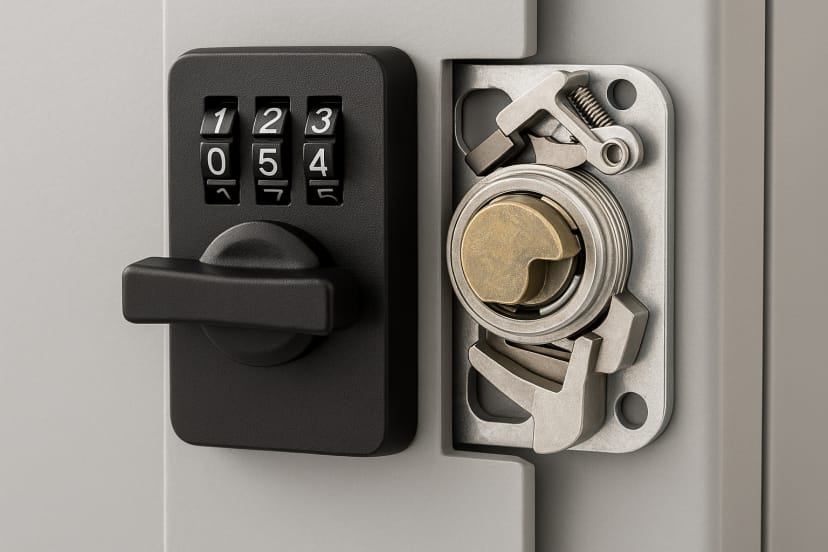
How Does A Four-Digit Lock Work Mechanically?
Internal Wheel Stack
Inside the body , there are four code wheels (0–9) on a spindle. Each wheel carries a small gate (notch). When all four gates line up on the same plane, the mechanism is “ready to open.”
Fence, Cam, and Latch
A spring-loaded fence rests against the wheels.
• Correct code: the aligned gates let the fence drop.
• The fence couples to a cam, the cam retracts the locking bar/latch, and the door opens.
• Wrong code: solid wheel surfaces keep the fence up; the cam cannot turn.
Dial–Wheel Drive (Clutch)
The front dials don’t hard-couple to the wheels all the time. A light clutch drives each wheel as you set numbers, then relaxes once set—this is why the dials feel precise but don’t drag the whole stack.
Automatic Reset / Desynchronization
When you relock and turn the knob:
• The cam returns; a reset link lifts the fence and decouples the dials.
• Wheels desync a few steps, so the previous code no longer sits in the window.
Result: the next user starts from a neutral state; no leftover combination.
How Does It Prevent Password Leakage?
The biggest problem with shared mechanical locks isn’t hacking — it’s memory.
Most people simply forget to spin the wheels after unlocking, leaving the old code visible for whoever comes next.
A four-digit mechanical lock tackles that with built-in, purely mechanical defenses that reset the code automatically.
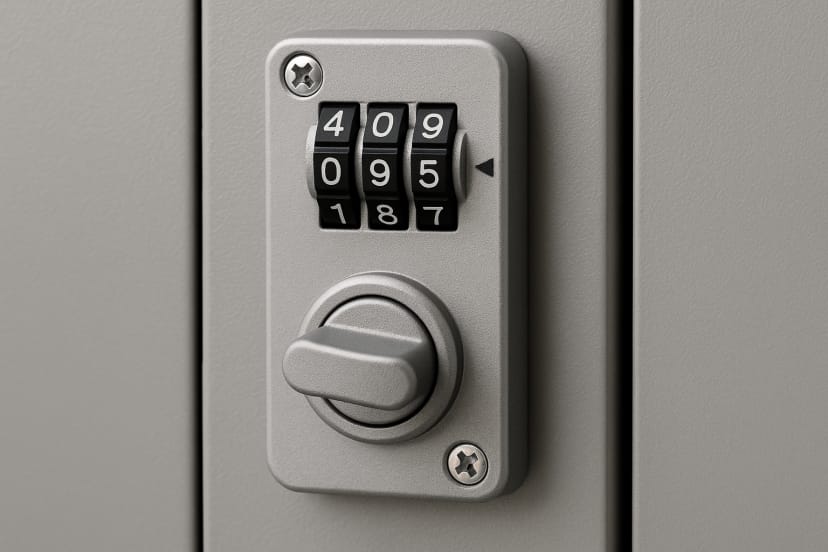
• Auto-Reset Cam – When the latch returns to the locked position, the internal cam lifts and disengages all four wheels, instantly clearing the previous combination.
• Offset Number Windows – The indicator marks are placed slightly off-center, so half-turned digits can’t be read by someone glancing over.
• Free-Spin Release – Once unlocked, the wheels rotate freely without engaging the mechanism, so no one can trace tactile feedback or see the last position.
• No Battery Memory – Because the system is entirely mechanical, there’s no stored data to leak or reset—every cycle starts fresh.
These simple but clever adjustments make sure each new user begins with a blank code field.
What Are Public & Private Modes and Their Tradeoffs?
Two Modes, Two Purposes
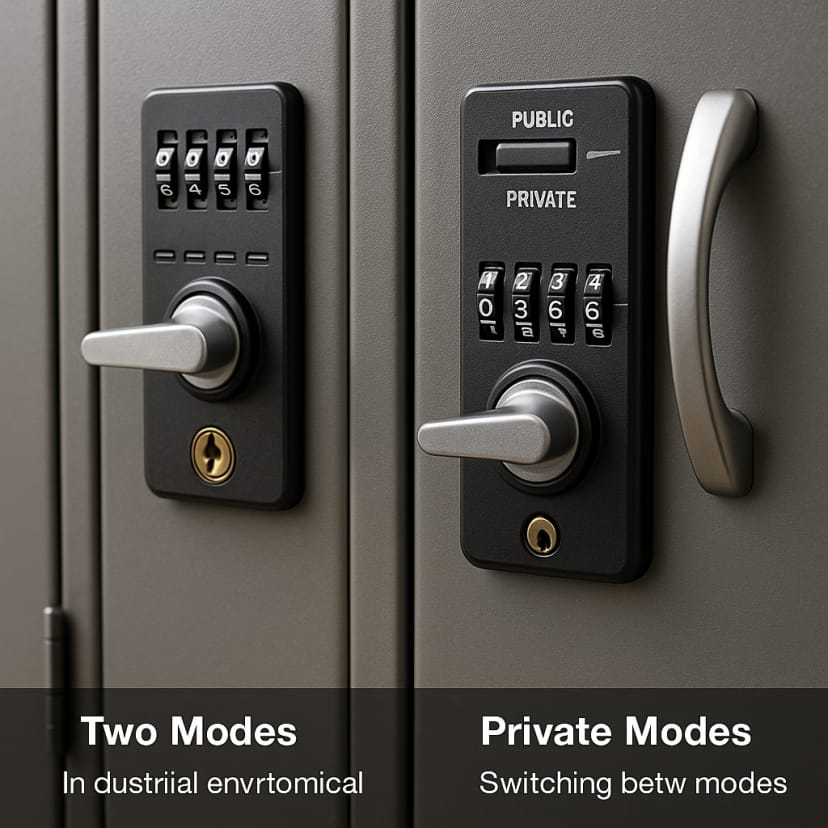
Four-digit code locks generally operate in two mechanical modes—public and private—each built for different usage patterns.
• Public Mode resets automatically every time the door opens. The user picks a code, locks the compartment, and when reopened, the mechanism clears itself. This is ideal for shared industrial spaces—shift lockers, tool rental stations, or temporary access panels—where users rotate frequently.
• Private Mode keeps the code fixed until manually changed. It suits assigned storage, like long-term employee lockers or lab cabinets, where the same person needs daily access without resets.
Switching Between Modes
The mode isn’t software-driven; it’s purely mechanical.
A small selector lever inside the housing flips the internal cam linkage:
• Public: the cam re-engages the reset gear each open/close cycle.
• Private: the reset gear disengages, leaving the wheels coupled.
Switching modes takes seconds during setup or maintenance, no firmware or tools required.
What Are the Tradeoffs?
• Public mode is flexible and easy to manage, but it only works as intended if users actually close the door all the way—the reset happens during that final turn of the latch.
• Private mode gives stability and privacy but needs manual help if someone forgets their code.
Industrial operators often mix both—public for shared stations, private for permanent staff.
Detail Enhancements
To make either mode more reliable, industrial models add fine design touches:
• Detent feedback on each wheel for precise setting, even with gloves.
• Offset indicator lines to reduce visual leaks.
• Master override (tubular key or rear access) for emergency entry without disassembly.
How Secure Is It Against Physical Tampering?
Built to Take a Beating
A decent four-digit lock can take years of daily use—10,000 cycles or more—without the wheels loosening or the latch bending.
The housing’s usually zinc alloy or stainless steel, heavy enough to shrug off kicks, dents, and the occasional slammed door.
Powder-coated or chrome-plated surfaces keep it from rusting or turning dull under moisture and grease.
Precision Is the Real Security
What really protects the code isn’t thickness—it’s tolerance.
If the dials feel loose, anyone can “read” the code by touch.
Good locks tighten every gap so the wheels spin smooth and silent, no hint of resistance to give a clue.
Some even add anti-exploration plates that make feel-cracking practically useless.
Weather and Longevity
Industrial spaces aren’t kind: dust, humidity, cleaning chemicals, and salt air all test the finish.
Quality models pass 48–72 hours of ISO 9227 salt-spray without rust spots.
Keep it clean and oiled twice a year, and it’ll outlast the locker it’s mounted on.
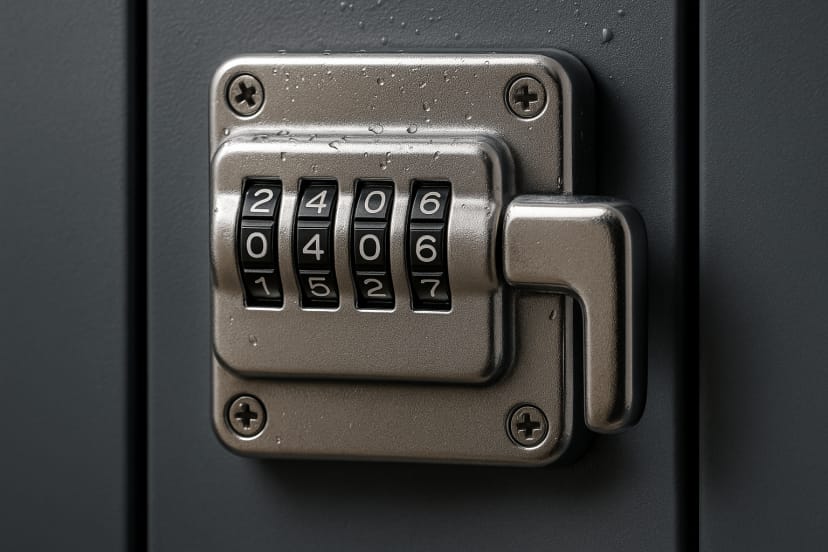
How Does It Simplify Management in Public Spaces?
The real advantage of a four-digit mechanical system appears once lockers scale up — rows of storage in factories, transport hubs, or staff areas, all changing hands every few hours.
With mechanical code locks, there are no keys to track, no batteries to replace, no resets to queue up.
Every use wipes itself clean; every user starts fresh.
That’s the reason Fornd designed its D3 Mechanical Code Series around long-term reliability and zero-maintenance logic.
Fornd Four-Digit Mechanical Code Lock Series
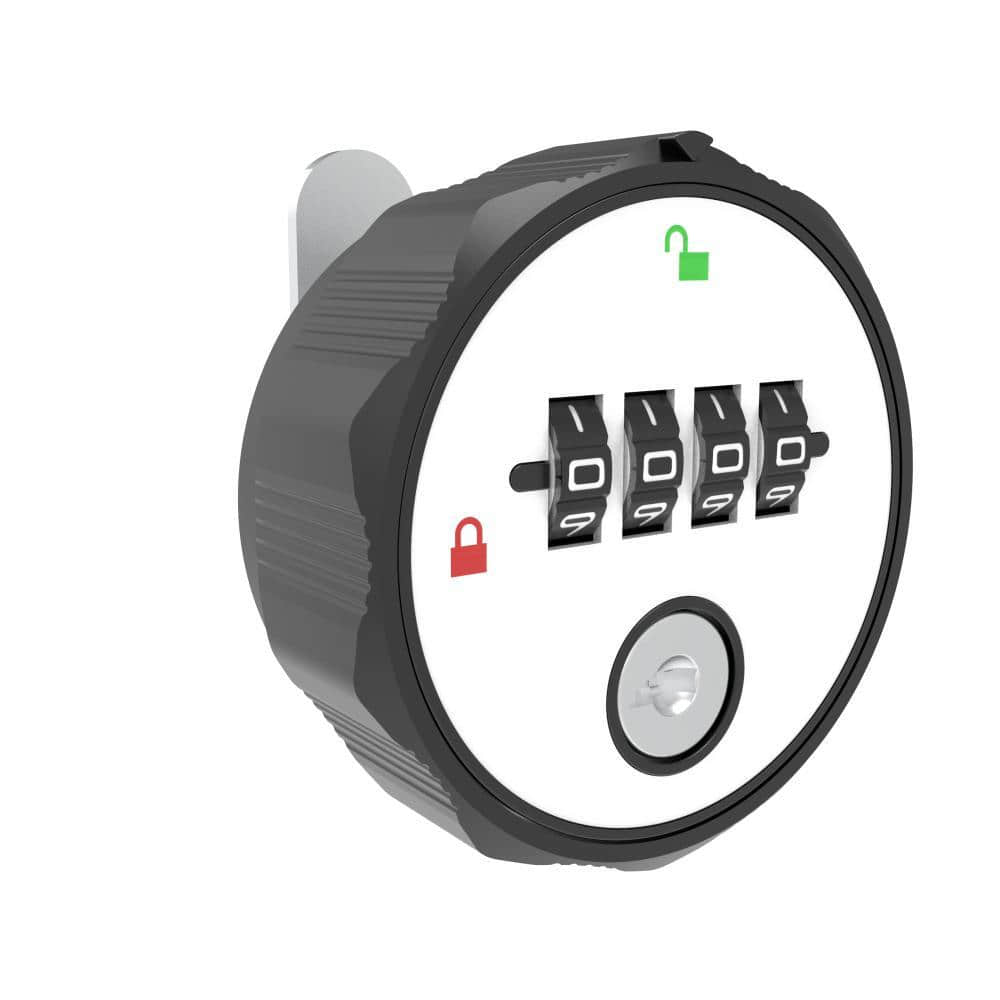
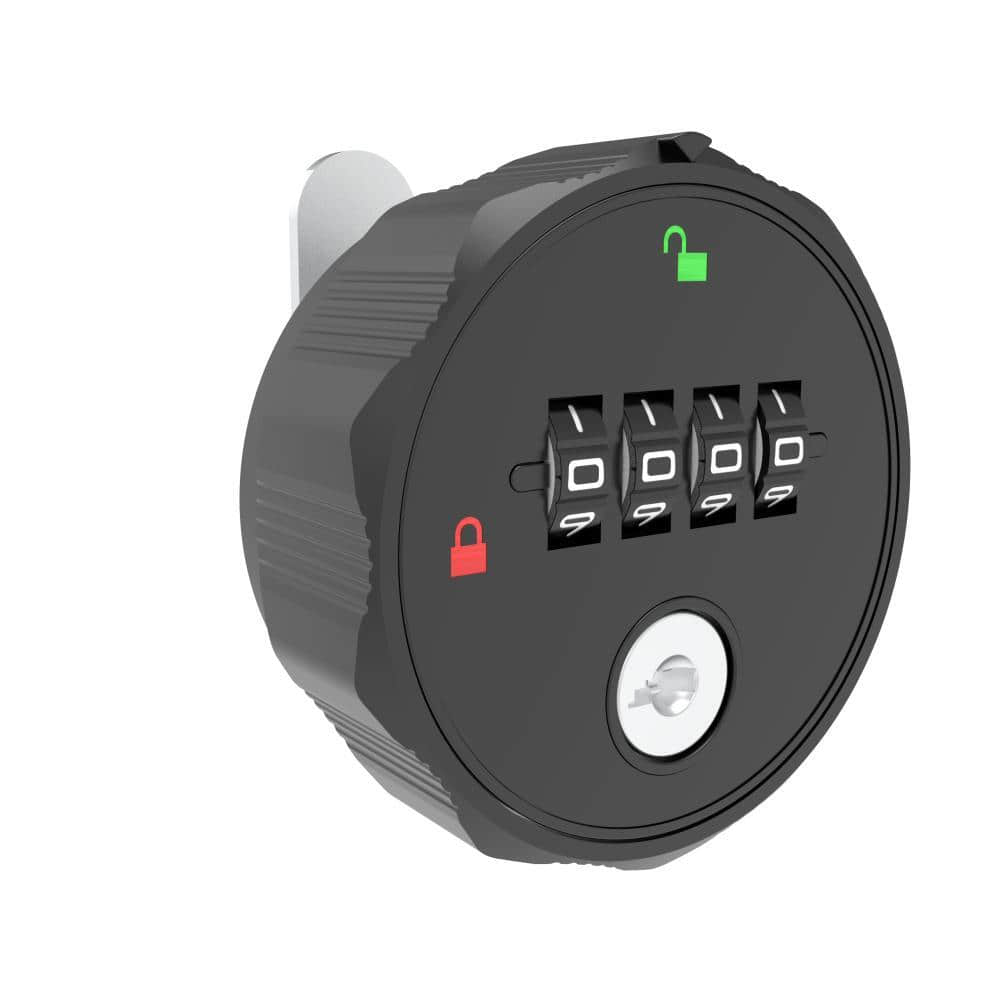
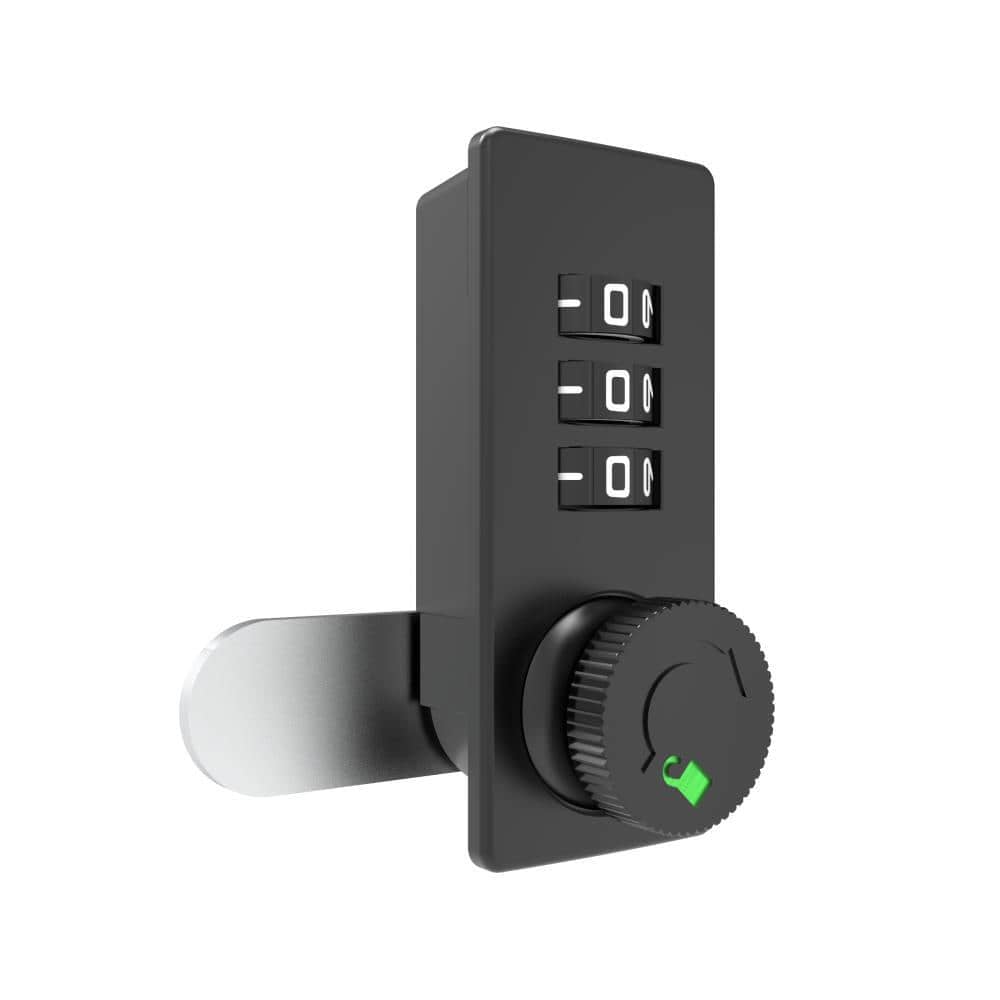
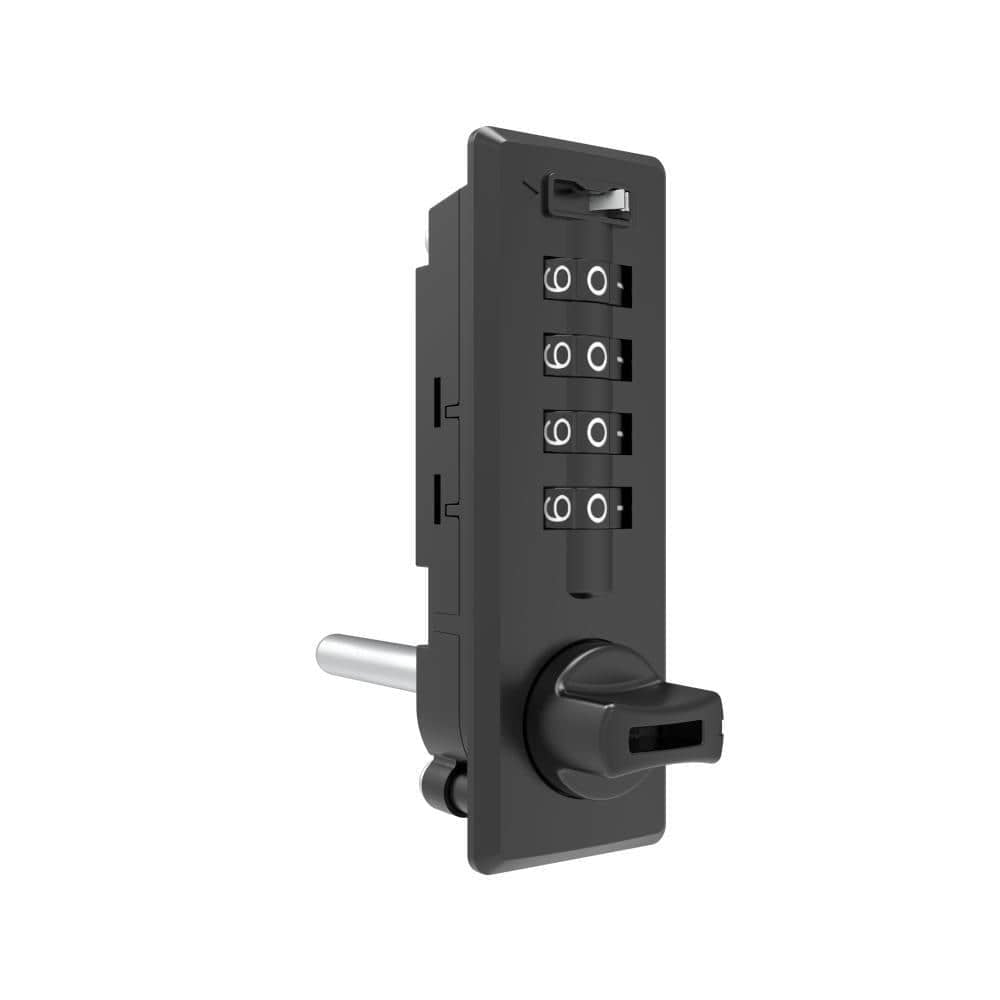
Image | Model | Material | Reset Type | Durability | Salt-Spray Resistance | Product Link |
| Fornd D3-1800-01 | Zinc alloy + ABS | Auto-reset (Public) | 10,000+ cycles | 72 h (ISO 9227) | |
| Fornd D3-1800-02 | Zinc alloy | Dual-mode (Public / Private) | 15,000+ cycles | 96 h
| |
| Fornd D3-1801 | ABS housing | Manual reset (3-digit) | 10,000 cycles | 48 h | |
| Fornd D3-1802 | Zinc alloy body + nylon wheel core | Auto-reset (4-digit) | 20,000+ cycles | 96 h |
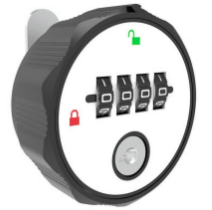
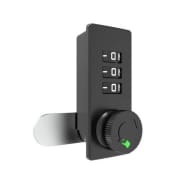
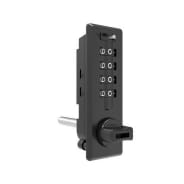
Each model follows the same principle — pure mechanical logic, no power dependency, and no software layer to fail.
Fornd’s locks are made for places where maintenance hours are expensive and reliability beats decoration: staff changing rooms, warehouse cabinets, and logistics hubs. Buy Fornd Four-Digit Mechanical Locks here:https://fornd.com/
FAQs
How many possible codes can a four-digit lock have?
10,000 combinations (0000–9999). Enough for random daily use.
Do I need power or batteries?
No. It’s 100% mechanical.
Can the code be changed easily?
Yes—just unlock, press reset, and spin new numbers.