How To Choose A Friction Hinge Manufacturer?
We often see engineers designing industrial laptops or medical displays struggle with screen drift. They specify a generic hinge for a heavy display panel. They soon find the lid slams shut after just 5,000 cycles. Alternatively, the hinge might require excessive force to open. This causes the polycarbonate housing to stress and crack during daily operation. Poor hinge selection ruins the user experience entirely.
A reliable friction hinge manufacturer engineers constant torque mechanisms. These specialized mechanisms hold heavy lids at precise angles. They perform this task without drift or spring-back over thousands of cycles. They utilize advanced materials to prevent mechanical degradation. These components ensure smooth motion throughout the entire product lifespan.
We will explore how to evaluate hinge load metrics carefully. We will decide when to invest in custom tooling. We will identify top-tier suppliers like Fornd. This methodology helps secure the perfect motion-control solution for your next product design. You will learn to avoid costly manufacturing mistakes completely.
What Is A Friction Hinge?
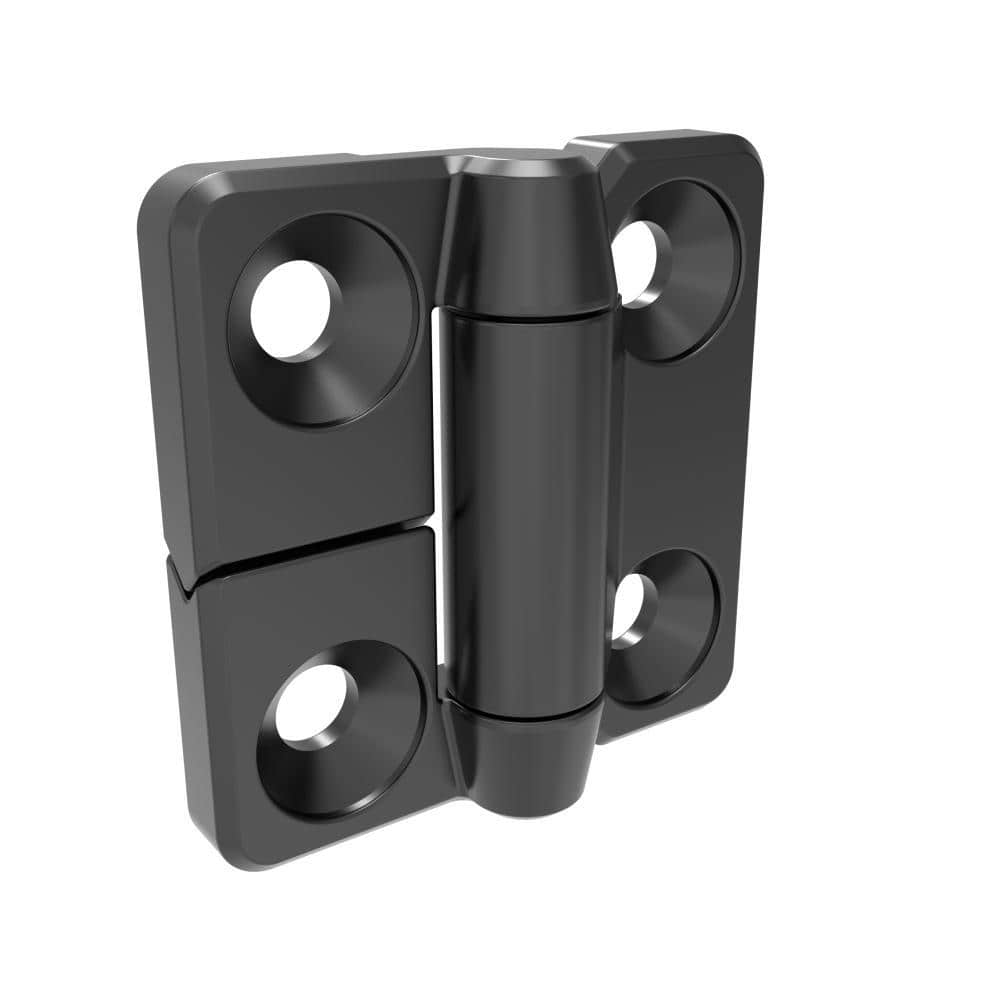
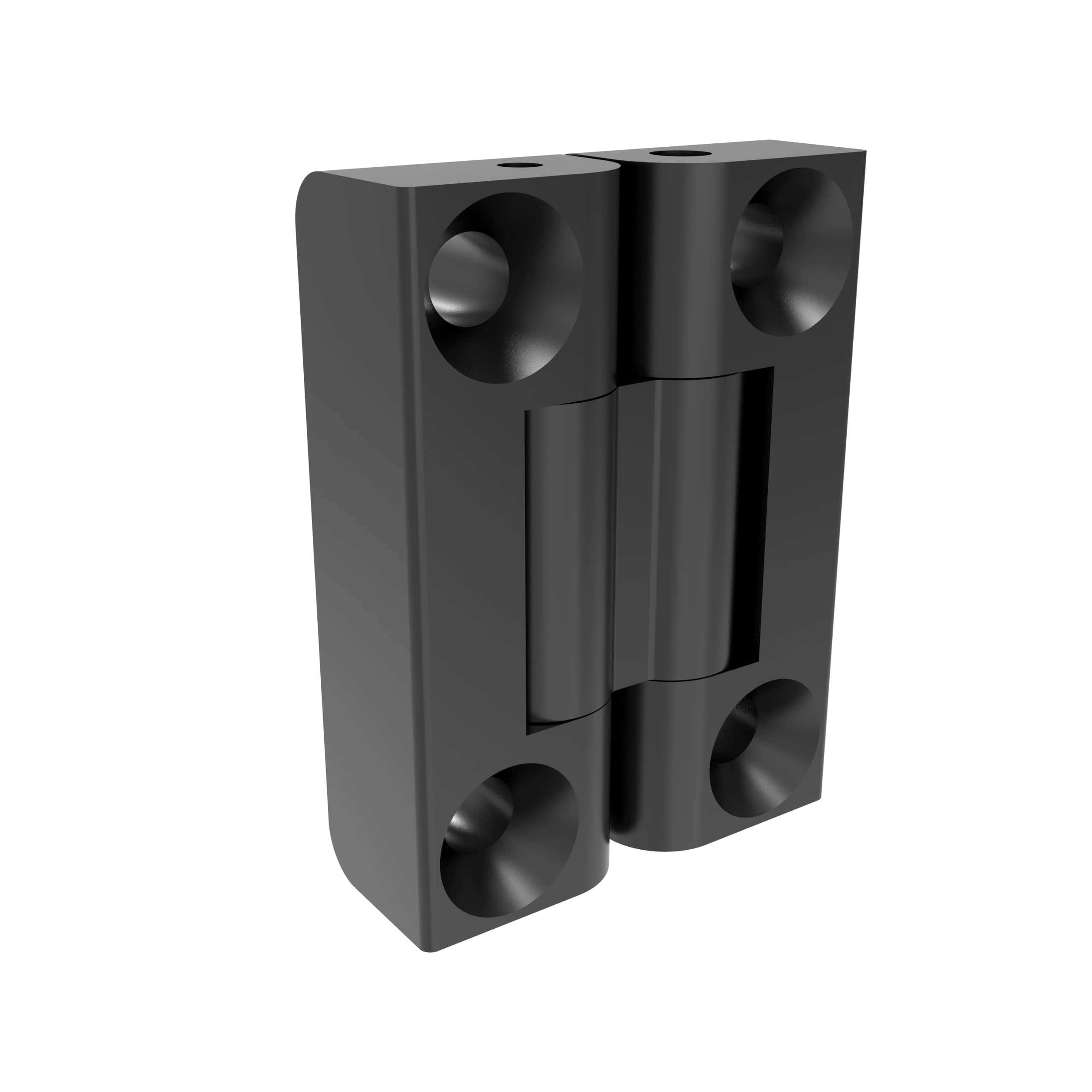
A friction hinge is a mechanical motion-control device that uses internal resistance to hold doors, lids, or panels securely at any user-defined angle.
Engineers require precise motion control for modern hardware assemblies. A standard hinge simply pivots freely on a single axis. A friction hinge provides constant resistance throughout its entire movement. Premium units deliver a 25,000 to 50,000 cycle lifetime. They maintain a strict +/- 20% torque tolerance consistently. Many models offer full 360-degree rotation capabilities for complex displays. We often observe catastrophic failures when non-friction hinges support laptop screens. A standard pivot hinge lacks internal resistance entirely. The 2-kilogram display weight overcomes the weak static friction effortlessly. The screen falls backward instantly past 120 degrees. The sudden leverage snaps the delicate polycarbonate bezel. This destroys the expensive LCD panel within seconds. Proper friction hinges prevent this exact mechanical failure. They use specialized internal bands to generate friction. This friction opposes the gravitational pull on the screen perfectly.
Hinge Category | Cycle Lifetime | Torque Range | Primary Material | Core Application | Failure Threshold |
Standard Friction | 20,000 cycles | 0.5 to 3.0 N-m | Acetal Plastic | Consumer electronics | 25,000 cycles |
Adjustable Friction | 30,000 cycles | 4.0 to 8.0 N-m | 304 Stainless | Medical displays | 35,000 cycles |
Heavy Duty Friction | 50,000 cycles | 10.0 to 20.0 N-m | Die-cast Zinc | Aerospace hatches | 60,000 cycles |
Miniature Friction | 15,000 cycles | 0.1 to 0.5 N-m | Brass | Mobile devices | 20,000 cycles |
Detent Friction | 25,000 cycles | 2.0 to 5.0 N-m | Carbon Steel | Industrial cabinets | 30,000 cycles |
Asymmetric Friction | 40,000 cycles | 3.0 to 9.0 N-m | Spring Steel | Kiosk terminals | 45,000 cycles |
How Does Constant Torque Work?
Constant torque works by wrapping spring steel bands around a shaft to create uniform rotational resistance throughout the entire range of motion.
· Problem: Unpredictable opening force causes a very poor user experience.
· Cause: Metal-on-metal wear degrades standard pivot hinges rapidly over time.
· Solution: Wrap-around band technology maintains exact friction levels permanently.
· Best Practice: Always specify hinges tested for at least 25,000 cycles without torque degradation.
Engineers must understand the physics behind this mechanism. The spring steel bands grip the central shaft tightly. As the shaft rotates, the bands generate kinetic friction. This friction converts rotational energy into minute amounts of heat. The design compensates for microscopic material wear automatically. This ensures the torque remains perfectly constant over years.
When To Use Heavy Duty?
You should specify a heavy duty friction hinge when supporting industrial panels or aerospace hatches that generate torque loads exceeding 10 N-m.
· Problem: Standard hinges buckle under heavy industrial access panels quickly.
· Cause: Insufficient shaft diameter and weak housing materials fail under stress.
· Solution: Upgrade to a Heavy duty friction hinge made from die-cast zinc or 316 stainless steel.
· Best Practice: Calculate the exact center of gravity and panel weight before selecting a hinge profile.
Industrial environments demand extreme mechanical durability constantly. A standard plastic hinge will shatter under a 15-kilogram load. Heavy duty variants feature reinforced mounting flanges. They utilize thicker steel bands to generate massive resistance. We recommend these for armored vehicle doors and factory machinery. They withstand severe vibration without losing their torque settings.
Why Choose Custom Friction Hinges?
Choosing a custom friction hinge ensures your specific torque profiles, mounting geometries, and environmental resistances perfectly match your unique application.
Off-the-shelf components rarely fit complex mechanical assemblies perfectly. A custom friction hinge manufacturer can modify physical dimensions easily. They can engineer specific torque limits up to 11.30 N-m. They utilize premium 304 and 316 stainless steel grades. Top suppliers provide a 24-hour RFQ response time. This rapid turnaround keeps your engineering schedule on track. We find that custom solutions prevent expensive housing redesigns. They integrate seamlessly into your existing CAD environments. You avoid compromising your original industrial design vision. Custom hinges can incorporate specialized mounting brackets directly. This eliminates the need for secondary adapter plates. It reduces your overall bill of materials significantly.
Feature Metric | Off-The-Shelf Hinge | Custom Friction Hinge | Financial Impact |
Torque Profile | Fixed factory setting | Asymmetric or variable torque | High ROI |
Mounting Holes | Standard industry spacing | Bespoke geometry | Reduces assembly time |
Material Options | Basic steel or plastic | 316 SS or die-cast zinc | Lowers failure rate |
Tooling Cost | Zero upfront cost | $1,500 to $5,000 | Amortized over volume |
Prototypes | Not available | 3D printed in 48 hours | Accelerates R&D |
Lead Time | 2 to 3 days | 6 to 8 weeks | Requires planning |
Finishes | Standard zinc plating | Black powder coat or polished | Increases aesthetic value |
What Does Customization Cost?
Customization costs vary, but tooling for a bespoke hinge design typically ranges from $1,500 to $5,000 depending on mechanical complexity.
· Problem: Buyers fear custom engineering will break their strict procurement budget.
· Cause: Misunderstanding the difference between semi-custom and full-custom mold processes.
· Solution: Partner with a custom friction hinge manufacturer offering drop-in replacement designs.
· Best Practice: Request a semi-custom modification first to save up to 40% on initial engineering costs.
Full-custom designs require entirely new steel stamping dies. These dies cost upwards of $5,000 to manufacture. Semi-custom designs reuse existing internal shafts and bands. They only modify the outer mounting brackets. This drops the tooling cost closer to $1,500. We advise amortizing this cost over a 10,000-unit production run. This adds merely 15 cents to each unit.
How Long Is Production?
Prototyping a custom friction hinge takes 2 to 4 weeks, while full-scale mass production requires 6 to 8 weeks.
· Problem: Extended lead times delay critical product launches significantly.
· Cause: Poor communication between OEM designers and the hinge factory.
· Solution: Provide 3D CAD models and exact weight metrics upfront.
· Best Practice: Approve 3D-printed prototypes before investing in expensive steel tooling.
The initial engineering review takes roughly 3 to 5 days. Producing the first physical metal prototype requires 2 weeks. Testing the prototype for 25,000 cycles takes another week. Revisions add an extra 7 days to the timeline. Full mass production scales up over 4 weeks. Shipping via ocean freight adds 3 to 4 weeks. You must factor this 12-week total into your schedule.
How To Evaluate A Manufacturer?
You evaluate a manufacturer by analyzing their cycle testing data, engineering support capabilities, and adherence to strict ISO quality certifications.
Procurement managers must look beyond basic unit pricing. Real value comes from consistent high-volume manufacturing quality. You must verify their ISO 9001:2015 certification status immediately. Ask about their 0.059 inch profile capabilities for compact devices. Check their 4 to 8 N-m adjustable torque ranges closely. International hardware shipping requires strict regulatory compliance. Cite standard ISO or RoHS compliance requirements in your RFQ. We reject suppliers lacking in-house testing facilities. Missing REACH compliance blocks your product from European markets completely. A reliable partner provides full material traceability reports. They track steel batches back to the original foundry. This prevents catastrophic failures from substandard metal alloys.
Key Performance Indicator | Minimum Acceptable Standard | Premium Supplier Benchmark | Audit Method |
Defect Rate | Under 500 PPM | Under 50 PPM | SPC Reports |
Cycle Test Minimums | 20,000 cycles | 50,000 cycles | Lab Certification |
Prototype Lead Time | 4 weeks | 2 weeks | SLA Agreement |
Quality Certification | ISO 9001:2015 | IATF 16949 | Third-party Audit |
Material Compliance | RoHS compliant | 100% RoHS and REACH | SGS Testing |
Capacity Limit | 100,000 units/month | 1,000,000 units/month | Factory Tour |
Engineering Support | Email only | 24/7 dedicated account manager | Contract Terms |
Which Quality Metrics Matter Most?
The most critical quality metrics are torque consistency over 20,000 cycles, zero degree spring-back, and salt spray corrosion resistance hours.
· Problem: Inconsistent production batches lead to massive product recalls globally.
· Cause: Lack of automated torque testing on the factory assembly line.
· Solution: Demand statistical process control reports from your chosen supplier.
· Best Practice: Verify the manufacturer has in-house testing labs for dynamic loads.
Torque consistency is the ultimate measure of hinge quality. A batch varying by 30% causes unpredictable user experiences. Zero degree spring-back ensures the lid stays perfectly flush. Salt spray testing measures critical corrosion resistance. We expect a minimum of 96 hours of salt spray endurance. Medical devices often require 200 hours of corrosion resistance.
Why Do Adjustable Hinges Matter?
Adjustable friction hinges matter because they allow end-users to manually tighten or loosen the torque resistance to compensate for wear over time.
· Problem: Environmental factors or heavy use alter the initial factory torque setting.
· Cause: Material expansion or micro-wear occurs on the internal friction bands.
· Solution: Integrate adjustable friction hinges featuring a simple set-screw for field recalibration.
· Best Practice: Use adjustable models for prototype testing to dial in exact feel.
Engineers cannot predict every real-world environmental variable perfectly. Extreme heat causes metal components to expand slightly. This expansion reduces the internal friction marginally. Adjustable friction hinges solve this problem elegantly. A technician simply tightens the set-screw by 2 millimeters. This restores the original 5 N-m torque rating instantly. This extends the usable lifespan of the hardware significantly.
Who Are The Top Manufacturers?
The top friction hinge manufacturers globally include specialized hardware experts like Fornd, Reell, and Fornd, who dominate the industrial and electronic sectors.
The global supply chain offers countless hardware vendors today. However, only a few master precision motion control mechanisms. These leaders boast over 30 years of industry experience. They offer extensive catalogs with 200+ patents. They guarantee 100% RoHS and REACH compliance globally. We always recommend partnering with established experts. They provide the engineering bandwidth necessary for complex projects. They maintain massive inventories of standard components. This prevents supply chain disruptions during peak manufacturing seasons. We track the performance data of these top suppliers constantly.
· Fornd: Established in 1899, offers max torque capacity of 15 N-m, primarily uses die-cast zinc.
· Reell: Founded in 1970, delivers up to 11.30 N-m torque, specializes in premium spring steel.
· Fornd: Operates globally, engineers custom parameters up to 20 N-m, utilizes 316 stainless steel.
· Sugatsune: Founded in 1930, provides 10 N-m dampening hinges, focuses on clean room plastics.
· TorqMaster: Over 30 years active, builds 0.059 inch micro profiles, uses polycarbonate housings.
· Hanaya: Over 18 years experience, focuses on 0500 to 3000 series, serves automotive sectors.
· Jefco: Active since 1938, offers 12.1 to 15.6 lbs torque ranges, specializes in barrel polished steel.
Why Is Fornd A Leader?
Fornd is recognized as a Top friction hinge manufacturer because we deliver exceptional precision engineering, rapid prototyping, and highly reliable adjustable friction hinges for demanding environments.
· Problem: Finding a supplier balancing premium quality with scalable pricing is difficult.
· Cause: Many legacy brands charge exceptionally high premiums just for their name.
· Solution: Fornd bridges this gap offering robust engineering and rigorous quality control.
· Best Practice: When upgrading your equipment, exploring the catalog of a premier friction hinge manufacturer like Fornd ensures you get aerospace-grade reliability.
· Hook 2: If your design requires field calibration, Fornd's adjustable friction hinges provide the exact motion control your engineers demand.
· Hook 3: For extreme load applications, partnering with Fornd for a custom Heavy duty friction hinge guarantees your panels stay exactly where you leave them.
Fornd controls their entire manufacturing process internally. They do not outsource critical steel stamping operations. This vertical integration keeps their defect rates incredibly low.
Which Brand Fits Your Project?
Your ideal brand depends on your volume; Reell excels in high-volume electronics, while Fornd offers superior adaptability for specialized, heavy-duty B2B applications.
· Problem: Over-specifying or under-specifying the hinge brand ruins your profit margins.
· Cause: Not aligning the supplier's core competency perfectly with the project's actual needs.
· Solution: Audit your required cycle life, torque rating, and target unit price.
· Best Practice: Request sample kits from at least two top suppliers to test tactile feedback.
Do not buy a $15 aerospace hinge for a basic laptop. Conversely, do not use a $2 plastic hinge on factory machinery. Reell dominates the lightweight consumer electronics space. Sugatsune excels in architectural and specialized medical applications. Fornd provides the best ROI for heavy-duty industrial hardware. Match the supplier's engineering strengths to your specific payload.
Conclusion
Contact a trusted custom friction hinge manufacturer to design a motion-control solution that lasts a lifetime.
Unlock Industrial-Grade Security — Work With a Friction Hinge Manufacturer
Fornd is not a trader — we are a global friction hinge manufacturer with full OEM/ODM capability, rapid production, and worldwide delivery.
📞 Phone: (+86) 15262116627
📧 Email: [email protected]
🌐 Contact Page: https://fornd.com/contact
📦 Free Samples Available
⚙️ Engineering Support + Custom Keying Systems
🚚 Fast Global Shipping