How to Choose an Industrial Lock&Hinges & Handles Manufacturer
Many procurement managers struggle when industrial handles snap under high torque. Engineers often face severe rust on hinges after minimal outdoor exposure. Delayed production lines due to late lock deliveries are another common nightmare. In 2026, global supply chains demand higher reliability than ever before. Substandard hardware components compromise the safety of expensive machinery. A failed latch can halt a million-dollar production line instantly. Choosing the right manufacturer requires evaluating multiple strict technical parameters. You must evaluate their material certifications and load-bearing test data. Assessing their custom engineering capabilities is also absolutely critical. We are Fornd, an expert industrial locks, handles, and hinges manufacturer. We created this guide to share our direct manufacturing knowledge. This information will help you avoid costly supply chain mistakes. Reading this equips you with exact metrics to secure durable hardware. We want to empower your procurement team with actionable technical insights.
Why Does Material Matter?
Hardware material dictates the lifespan, load capacity, and corrosion resistance of your entire mechanical system.
Equipment rusts or breaks prematurely in harsh industrial environments. Buyers often select the wrong alloy to save upfront costs. This critical mistake leads to catastrophic failures in the field. You must match the specific metal grade to your exact operational environment. Always demand salt spray test reports before buying any batch.
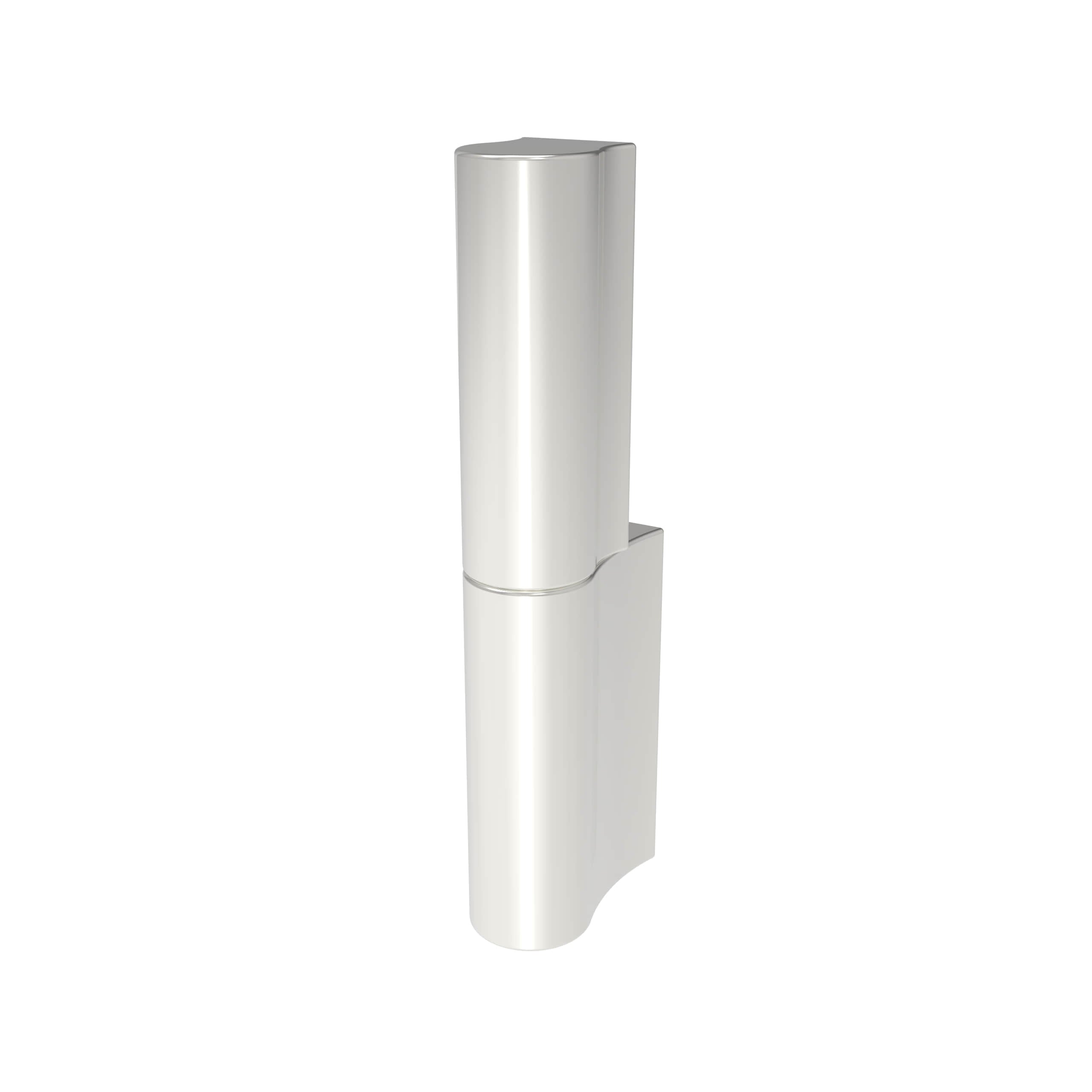
Neutral salt spray test for Fornd rotary locks and swing hinges
A 120-hour salt spray test is the baseline for outdoor applications. Material selection directly impacts your long-term operational bottom line. Engineers must calculate the total cost of ownership over time. Replacing a rusted hinge costs ten times more than buying stainless steel initially. We test every batch of raw metal using optical emission spectrometry. This ensures the chemical composition meets strict international standards. Proper material selection eliminates 80 percent of premature hardware failures.
Which Alloy Is Best?
Selecting the correct alloy provides a 30 percent longer lifespan and prevents sudden mechanical failures.
Compare 304 stainless steel against 316 stainless steel carefully. Grade 316 contains molybdenum for superior chemical resistance outdoors. Grade 304 is cost-effective but vulnerable to high-salinity environments. Zinc alloys work exceptionally well for indoor electrical enclosures. Zinc provides excellent moldability for complex industrial handle designs. Using the right material prevents costly maintenance downtime. We always verify raw material certificates before casting begins.
Material Grade | Ideal Environment | Cost Ratio | Tensile Strength | Lifespan Expectancy |
304 Stainless Steel | Standard outdoor, fresh water | 1.0x | 505 MPa | 15 years |
316 Stainless Steel | Marine, chemical, high salinity | 1.4x | 515 MPa | 25 years |
Zinc Alloy (Zamak) | Indoor enclosures, low moisture | 0.6x | 283 MPa | 10 years |
Polyamide Plastic | Corrosive, lightweight needs | 0.4x | 80 MPa | 8 years |
Carbon Steel | Heavy indoor machinery | 0.8x | 400 MPa | 12 years |
How Do Standards Work?
Testing standards verify that locks and hinges can survive thousands of operational cycles without mechanical failure.
Heavy-duty doors sag over time due to weak hinges. Latches often fail to secure properly under constant vibration. The underlying cause is usually a lack of rigorous cycle testing. The hardware was never subjected to real-world stress simulations. You must specify products that meet recognized international testing standards. Define your exact load capacities before requesting any quotes. Without predefined metrics, suppliers will quote the weakest available product. Testing data removes the guesswork from your procurement process. Always request the actual laboratory reports from your supplier. Visual inspections cannot reveal internal micro-fractures in cast metals. We utilize automated testing rigs to simulate decades of abuse.
What Are Key Metrics?
Key metrics include 100,000 operational cycles and 500 lbs static load limits for heavy doors.
High-traffic areas necessitate a minimum of 100,000 operational cycles. This ensures the internal springs and cams do not degrade. Heavy industrial doors require static load limits up to 500 lbs. You must differentiate between Grade 1 and Grade 2 durability levels. Grade 1 represents the highest security and durability for commercial applications. Grade 2 is only suitable for moderate traffic and lighter loads. We test our hinges beyond these standard limits for safety margins. This guarantees our hardware performs flawlessly in demanding 2026 industrial environments.
Test Type | ANSI Grade 1 Standard | Industrial Requirement | Fornd Internal Standard | Failure Consequence |
Operational Cycles | 100,000 cycles | High-traffic access | 150,000 cycles | Latch jamming |
Static Load Limit | 300 lbs | Heavy machinery doors | 500 lbs | Door sagging |
Salt Spray Resistance | 96 hours | Outdoor exposure | 120 hours | Severe rust |
Impact Resistance | 2 blows (75 ft-lbs) | Vandalism protection | 4 blows (100 ft-lbs) | Housing fracture |
Torque Tolerance | 150 in-lbs | Manual override | 200 in-lbs | Handle snapping |
Can They Customize Design?
A top manufacturer can modify dimensions, tolerances, and finishes to perfectly match your specific equipment enclosures.
Standard off-the-shelf parts often do not fit unique machinery designs. Rigid suppliers lack in-house engineering and dedicated R&D teams. They force you to alter your machine to fit their hardware. You should partner with manufacturers offering dedicated CAD and 3D modeling. Request rapid prototyping to test physical fitment early in the process. This prevents discovering clearance issues during final assembly. Custom hardware elevates the perceived value of your final product. Ergonomic custom handles reduce operator fatigue during repetitive daily tasks. We utilize advanced CNC machining to create complex geometries quickly. This agility keeps your product development timeline strictly on schedule.
When Should You Customize?
You should customize when facing unique enclosure geometries or when requiring strict manufacturing tolerances.
Customization is vital for tight spaces and irregular panel thicknesses. We achieve a strict +/- 0.05mm manufacturing tolerance for custom parts. This precision ensures IP65 sealing for waterproof electrical cabinets. We have served 12 diverse industries with tailored hardware solutions. Explore our custom industrial locks and hinges solutions to see how we adapt to unique specs. Our engineering team works directly with your mechanical designers.
· Submit initial CAD drawings and environmental requirement data.
· Receive our feasibility report and material suggestions within 48 hours.
· Review the optimized 3D models provided by our engineering team.
· Approve the 14-day prototype turnaround for physical fitment testing.
· Conduct a 500 lbs load test on the physical prototype.
· Finalize the +/- 0.05mm manufacturing tolerance specifications.
· Initiate mass production with a locked 30-day delivery schedule.
Is Supply Chain Stable?
A stable supply chain guarantees on-time deliveries, preventing costly halts in your own manufacturing production lines.
Sudden production halts frequently occur due to hardware backorders. This happens when relying on middlemen instead of direct factory sources. Middlemen cannot control the actual production floor schedule. You must audit the production capacity and quality control of the factory. Choose direct manufacturers for better scaling and transparent pricing. Direct communication eliminates misunderstandings regarding technical specifications and delivery dates. Supply chain resilience is a critical competitive advantage in 2026. A delayed batch of hinges can delay millions in revenue. We control every step from die-casting to final powder coating. This vertical integration shields our clients from external supply disruptions.
How To Verify Reliability?
You verify reliability by checking ISO certifications, reviewing defect rate metrics, and assessing raw material inventory.
Check for updated ISO certifications before signing any vendor contracts. Demand to see their historical defect rate metrics and QA processes. We maintain a strict <0.1% defect rate across all product lines. Explain how bulk orders can yield a 5% budget saving. Direct manufacturers hold extensive raw material inventories to buffer market shocks. Review our manufacturing facility capabilities to understand how we maintain high yields. We utilize automated assembly lines to guarantee a 99% on-time delivery rate. Partnering with a true manufacturer provides ultimate peace of mind.
Metric | Local Distributor | Direct Manufacturer (Fornd) |
Pricing Structure | High (Includes middleman markup) | Factory direct (5% budget saving) |
Delivery Control | Low (Dependent on third parties) | High (99% on-time delivery rate) |
Defect Resolution | Weeks (Requires shipping back) | Immediate (Internal QA team) |
Customization | None (Off-the-shelf only) | Full (+/- 0.05mm tolerance) |
Production Capacity | Limited to warehouse stock | Scalable (100,000+ units/month) |
Communication Speed | Slow (Relays messages) | Fast (Direct engineer access) |
What Are Next Steps?
Selecting the right hardware manufacturer secures your product quality and ensures long-term operational success.
Selecting the right hardware manufacturer secures your overall product quality. Focus on material data, strict testing, custom capabilities, and reliable delivery. As industrial demands grow in 2026, partnering with a genuine manufacturer is vital. It ensures long-term operational success for your heavy machinery. Ready to upgrade your hardware supply? We are here to help. Contact us today via our website inquiry form to get expert advice. You can also request free samples for your next project. Please leave your contact details on our website. Our engineers will reach out within 24 hours to assist you.